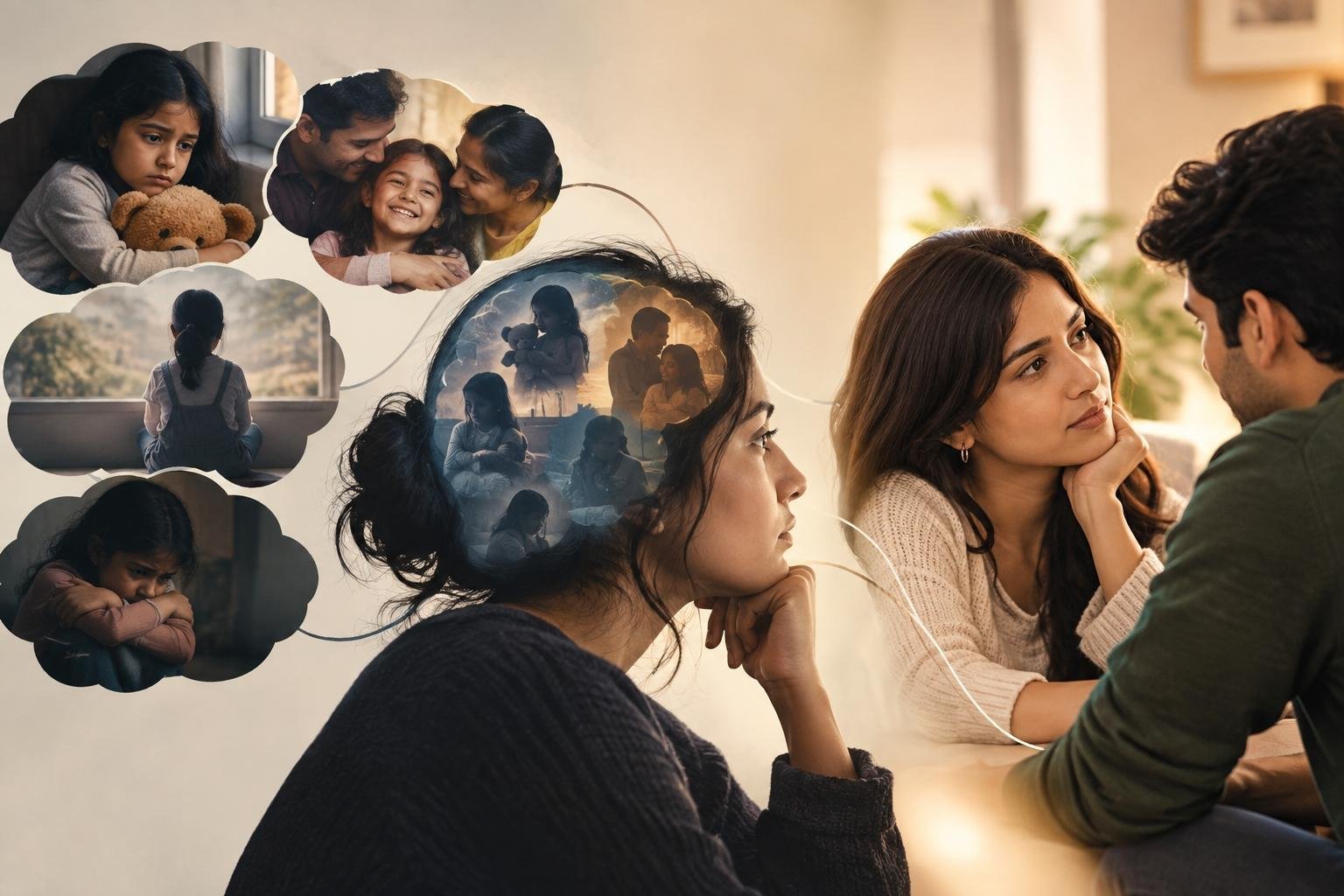
Have you ever wondered why you react so strongly to certain things in your relationship?
Maybe you become anxious when your partner doesn’t reply.
Maybe you find it difficult to trust someone, even when they haven’t given you a reason not to.
Maybe you avoid difficult conversations because conflict makes you uncomfortable.
Sometimes, these reactions aren’t only about what is happening today.
They may be connected to what you experienced growing up.
Childhood Shapes How We Understand Relationships
As children, we learn about relationships by watching and experiencing the people around us.
We learn:
- What love looks like.
- How people communicate.
- Whether it feels safe to express emotions.
- How conflict is handled.
- Whether our needs are heard.
- Whether we can trust others.
These experiences can influence how we behave in relationships later in life.
For example, a child who grows up feeling heard may find it easier to express emotions as an adult.
Someone who grew up around constant criticism may become overly sensitive to rejection or criticism.
Someone who experienced unpredictable affection may constantly seek reassurance in relationships.
The past doesn’t automatically determine your future, but it can influence your patterns.
Why Do We Repeat Certain Patterns?
Sometimes, we carry childhood beliefs into adult relationships without realising it.
You may think:
“If I say what I really feel, they might leave.”
So you stay silent.
Or:
“I have to keep everyone happy.”
So you become a people-pleaser.
Or:
“I can’t depend on anyone.”
So you avoid emotional closeness.
These beliefs may have made sense at one point in your life.
But as an adult, they may no longer serve you.
Your Partner May Trigger an Old Wound
Sometimes, your partner’s behaviour isn’t the only thing you’re reacting to.
A situation today may remind you emotionally of something from your past.
For example, your partner doesn’t respond to your message.
Instead of thinking:
“They may be busy.”
Your mind may immediately go to:
“They don’t care about me.”
The reaction may feel much bigger than the situation itself.
This doesn’t mean your feelings aren’t valid.
It means there may be more underneath the reaction that deserves to be understood.
Awareness Can Change the Pattern
Understanding your childhood doesn’t mean blaming your parents or staying stuck in the past.
It means becoming aware of yourself.
Ask yourself:
What situations trigger me?
What am I afraid will happen?
Where did I learn this behaviour?
Is this reaction about what is happening now, or something I have experienced before?
These questions can help you move from simply reacting to responding consciously.
You Can Build Healthier Relationships
Your childhood may have influenced your relationship patterns, but it doesn’t have to define them.
With self-awareness, emotional intelligence, healthy communication and support, you can learn new ways of responding.
You can learn to communicate instead of shutting down.
You can set boundaries instead of people-pleasing.
You can build trust instead of constantly expecting rejection.
You can understand your emotions instead of allowing them to control your behaviour.
Final Thought
You are not responsible for everything you experienced as a child.
But as an adult, you have the opportunity to understand your patterns and choose what you want to carry forward.
Healing isn’t about becoming a different person.
Sometimes, it is about understanding yourself better so you can create the relationships you always wanted.
Your past may have shaped you. It doesn’t have to decide your future.
